

Switzerland has a reputation for precision. Say "Swiss" and people think of watches, chocolate, chemistry: things that work because someone decided exactly what belonged, and left everything else out.
Nicolette carries that same instinct, and it shows up in an unexpected place. The clearest sign of it is the decision to build a skincare routine around doing less.
At a glance: what makes Nicolette Swiss
- Manufactured in Switzerland under the legal "Swiss indication of source" standard (60% of manufacturing costs, 80% of R&D and production costs must originate in Switzerland)
- Alpine-sourced butterfly bush extract in the Hyaluronic Eye Serum
- Upcycled barley (a beer-production by-product) in the Hyaluronic Face Cream
- Fragrance developed in collaboration with a Swiss perfumer, calibrated for skin tolerance
- Dermatest-certified "very good" for skin compatibility
- Packaging shaped by the same clarity and restraint that defines Swiss graphic design
The Enemy Is Overcare
Most skincare brands sell you the next step. Nicolette's founding idea runs the other way.
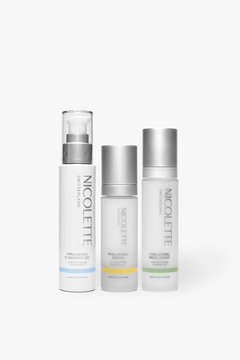
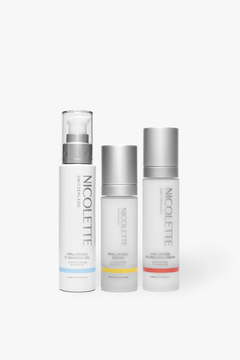
The brand's own language for it is Überpflege, overcare. Too many actives, applied too often, in a routine that keeps changing before the skin has had time to respond. Nicolette's answer is the 30-Day Reset Routine: three products, three steps, one decision.
Cleanse. Regenerate. Protect.
Nothing about that is complicated, and that's the point. The formulas are built to be sufficient on their own. The Hyaluronic Cleansing Gel is designed to leave hyaluronic acid behind even after rinsing, so the "step" keeps working after you've stopped thinking about it. Effectiveness comes from restraint rather than accumulation.
This is where Switzerland actually enters the story, as a working method rather than an aesthetic reference. The same instinct that shaped Swiss pharmaceutical manufacturing, deciding what's necessary, executing it precisely, and removing everything else, is what a three-step routine with no room for a fourth step actually requires. A country that made precision manufacturing its export got there by working out what to cut.
A Regulated Word
It's worth knowing that "Swiss" carries legal weight here. Since 2017, Switzerland has required that at least 60% of a cosmetic's manufacturing costs and 80% of its R&D and production costs originate in the country before it can carry a Swiss indication of source. Nicolette is manufactured to meet that standard directly.
That matters because the Swiss ingredients that follow are genuinely load-bearing within the formula, sourced with intention rather than added for effect.
Small Pieces of Switzerland, Inside the Formula
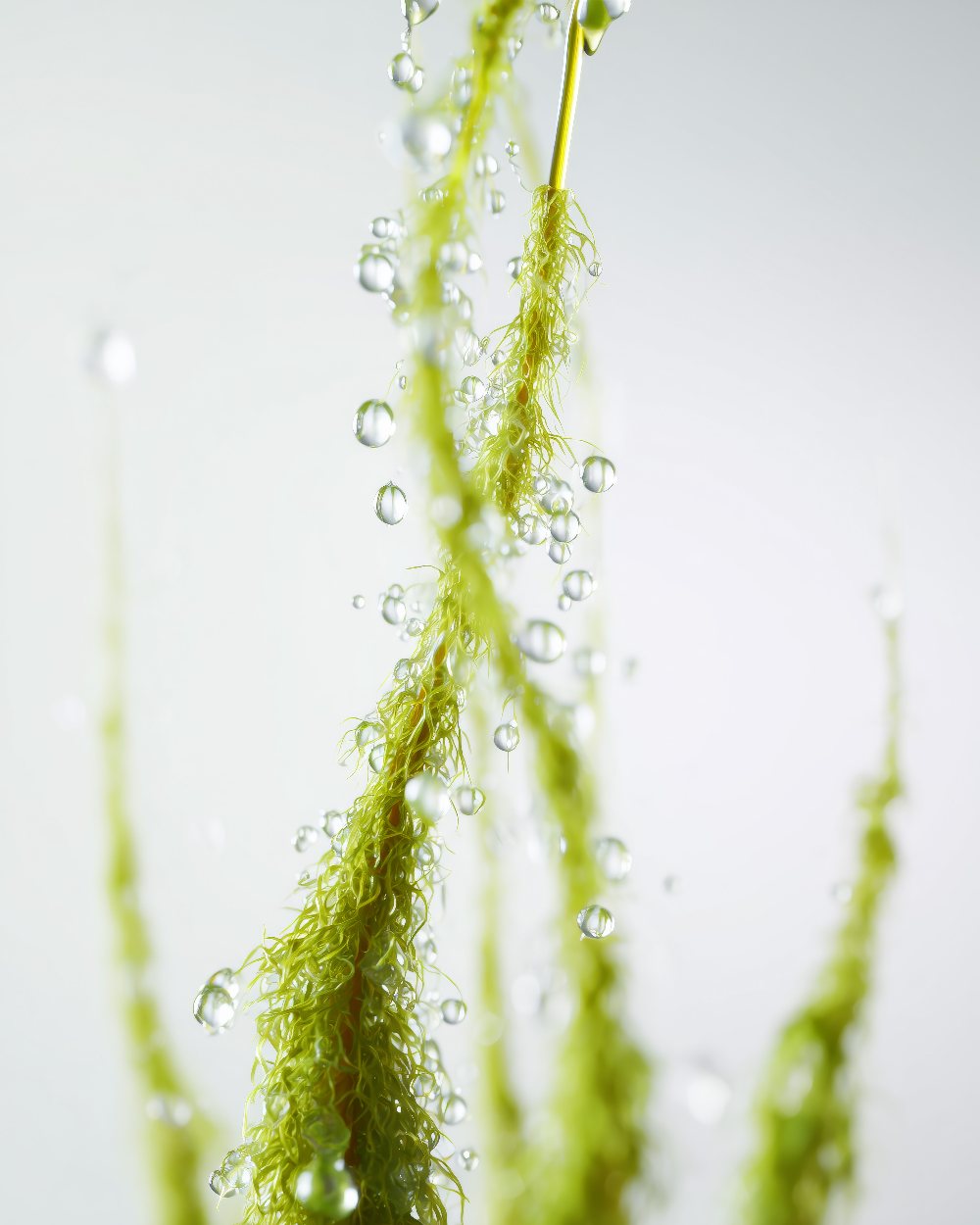
- Alpine butterfly bush. Buddleja davidii grows in the Alps and shows up in several Nicolette formulas; the extract in the Hyaluronic Eye Serum is sourced there directly. It's a quiet inclusion. Nicolette doesn't need to build an entire story around one Alpine plant to justify using it. It's there because it works, and it happens to be close to home.
- Upcycled barley. The barley extract in the Hyaluronic Face Cream is a by-product of beer production, given a second purpose as an active ingredient rather than discarded.
- Upcycled blueberry. The Eye Serum goes further, pairing that upcycled barley with an active derived from upcycled blueberries, part of what Nicolette calls Circular Beauty: using what already exists before sourcing something new. It's sustainability built in before the formula ever reaches the bottle.
- A Swiss-developed fragrance. The scent across the range was created in collaboration with a Swiss perfumer, calibrated specifically for skin tolerance rather than for how it smells on a paper strip in a store. Even the fragrance went through the same filter as everything else: does this need to be here, and does it need to be this strong.
- Dermatest "very good." Every formula is tested for skin compatibility rather than simply described as gentle.
- Recyclable packaging. Materials are chosen to be recyclable, with plastic minimised wherever the formula allows it.
None of these facts is dramatic on its own. That's rather the point: precision doesn't announce itself, it just shows up consistently in the places no one's checking.
Swiss Design, on the Shelf
Switzerland's other export is a way of designing things, not just making them. In the mid-twentieth century, designers in Zürich and Basel, among them Josef Müller-Brockmann, Emil Ruder and Armin Hofmann, developed what became known as Swiss Style: strict grids, sans-serif type, and a working assumption that information should be legible before it's decorative. The style went on to shape corporate identity and packaging design worldwide, largely because it kept getting out of its own way.
That same instinct runs through Nicolette's packaging. The typography sits with room around it. The hierarchy is clear: what the product is, what it does, then everything else recedes. A muted palette does the job of a dozen callouts. It's a small, consistent decision repeated across every touchpoint, and it comes from the same design tradition that shaped how Swiss companies have presented information for the last seventy years.